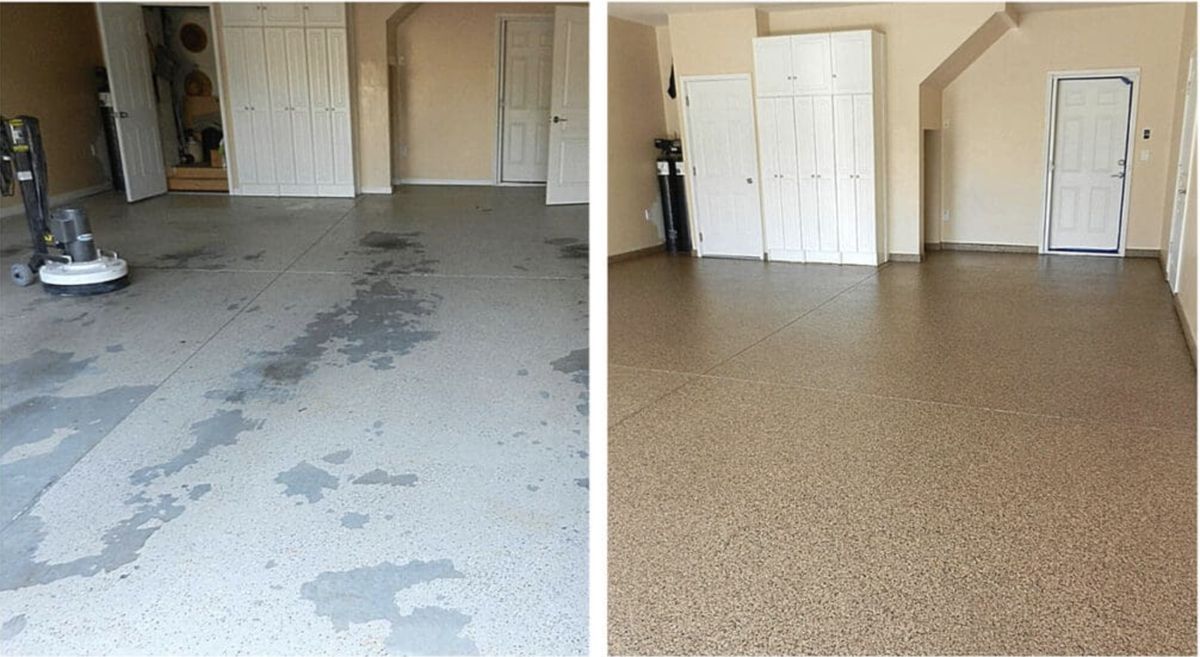
Commercial concrete floors take punishment that residential slabs never see—forklift traffic, chemical spills, constant foot traffic, and heavy rolling equipment. Bare concrete dusts, stains, and degrades under that use. A properly installed commercial epoxy system turns the slab into a sealed, washable surface that handles all of it without maintenance-intensive recoating every few years.
Tucson Businesses & Industrial
Heavy-duty epoxy and polyaspartic systems for warehouses, retail, restaurants, auto shops, and medical facilities. Desert-rated and built for continuous commercial use.
📞 Call (520) 675-6593 for a Free Commercial EstimateCommercial epoxy systems are specified differently than residential garage floors. The selection depends on traffic type, chemical exposure, slip resistance requirements, and downtime tolerance—not just aesthetics.
For warehouse and industrial spaces, we typically install a high-build epoxy with quartz or flint aggregate broadcast for abrasion resistance and traction under pallet jacks and forklifts. For retail, restaurant, and office environments, a thinner decorative system with a polyaspartic topcoat gives you a clean, attractive surface that holds up under daily cleaning.
Every commercial install starts with diamond grinding to mechanically open the concrete surface, followed by moisture vapor emission testing. In Tucson commercial buildings—especially older warehouse stock and retail buildings in Pima County—slab moisture is a consistent issue that causes premature delamination if not addressed. We test and address it before the first coat goes down.
Schedule a Walkthrough →
High-build epoxy with quartz aggregate for forklift traffic, heavy pallet loads, and continuous daily use. Chemical-resistant systems for manufacturing and industrial environments.
Seamless, grease-resistant epoxy with anti-slip aggregate for health code compliance. No grout lines for bacteria to collect. Easy to clean with commercial degreasers.
Oil, brake fluid, and antifreeze resistant systems for service bays and showrooms. Polyaspartic topcoats handle the thermal cycling from Arizona heat and AC systems.
Decorative epoxy and polished concrete systems that make a visual impression. Low-maintenance surfaces that stay looking sharp under daily foot traffic and retail cart use.
Seamless, chemical-resistant epoxy for medical offices, clinics, and labs. Meets cleanroom and hygiene standards. Compatible with standard hospital-grade disinfectants.
Impact-resistant systems for gyms and fitness facilities. Available with rubber aggregate for dropped weight protection and shock absorption under equipment.
Residential garage systems are designed for two cars, weekend projects, and light foot traffic. Commercial systems are engineered around the specific load, chemical, and traffic conditions of your operation—and they’re built to a higher thickness and hardness to match.
In Tucson commercial buildings, we frequently encounter two issues residential installers miss: high moisture vapor emission from older slabs—common in 1980s and 1990s warehouse and retail buildings in Pima County—and substrate contamination from years of oil and chemical exposure. Both cause premature failure if not properly addressed before coating.
We use a calcium chloride moisture test (ASTM F1869) on every commercial job and adjust our primer selection based on the result. For contaminated slabs, we may recommend shot blasting rather than just grinding to ensure the primer reaches uncontaminated concrete. These steps add time, but they’re why our commercial floors don’t delaminate two years after install.
Call (520) 675-6593 — Free Commercial EstimateCommercial pricing varies more than residential because of the range in system types and surface conditions. Here are typical installed ranges for Tucson commercial projects:
| System Type | Typical Cost Per Sq Ft | Common Applications |
|---|---|---|
| Standard commercial epoxy + polyaspartic topcoat | $3 – $6 | Office, retail, light warehouse |
| High-build epoxy with quartz broadcast | $5 – $9 | Warehouse, auto shop, industrial |
| Decorative epoxy with color flake | $4 – $8 | Showrooms, gyms, retail |
| Anti-slip kitchen system | $6 – $10 | Restaurants, commercial kitchens |
| Surface contamination remediation | $1 – $3 add-on | Oil-soaked or aged slabs |
Large square footage typically reduces per-foot cost. Written quotes provided after on-site moisture testing and surface assessment. Pricing as of 2026 for Tucson, AZ.
Get a Commercial Floor QuoteCommercial epoxy flooring in Tucson typically runs $3 to $12 per square foot installed, depending on the system, surface condition, and square footage. Large warehouse and industrial spaces benefit from volume pricing. Retail and restaurant floors with decorative requirements run higher. We provide written quotes after an on-site walkthrough and moisture assessment.
A properly installed commercial epoxy system in Tucson lasts 10 to 20 years under normal commercial traffic. The key factors are surface prep quality, moisture vapor barrier inclusion, and topcoat selection. We use polyaspartic topcoats rated for continuous heat above 140°F on all Tucson commercial installs, which handles Arizona’s summer temperatures without softening or degrading.
Yes. Heavy-duty commercial epoxy systems with quartz aggregate or high-build broadcast layers are designed for forklift traffic, pallet jacks, and rolling equipment. The system thickness and aggregate selection depend on the load ratings you need. We spec the right system for your specific use case during the walkthrough.
Most commercial epoxy installations in Tucson take one to three days depending on square footage and system type. Polyaspartic topcoats cure in four to six hours, which minimizes downtime for businesses that can’t afford extended closures. We work with your schedule to minimize disruption—including evenings and weekends for high-traffic operations.
Yes. Seamless epoxy flooring is popular in commercial kitchens because it has no grout lines where bacteria can collect and is resistant to grease, oils, and cleaning chemicals. Anti-slip aggregate can be added to meet health department requirements for wet kitchen environments.