Tucson, AZ — Serving Pima County
Garage Epoxy Flooring in Tucson, AZ
Multi-coat garage floor systems with moisture vapor barriers and UV-stable polyaspartic topcoats. Built for Arizona heat, desert UV, and monsoon humidity.
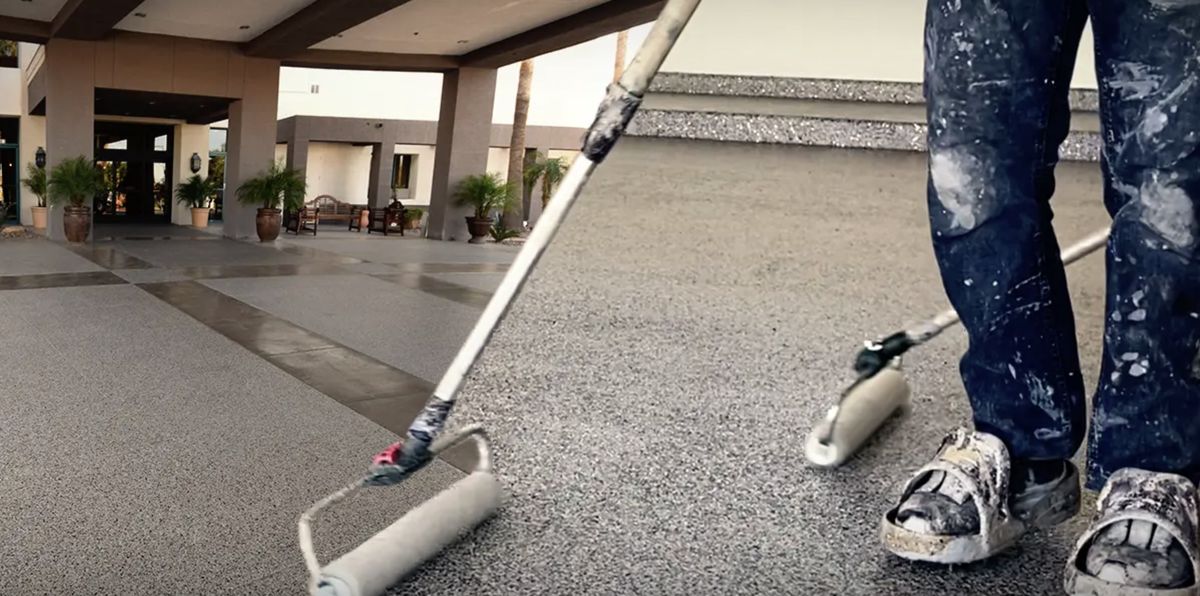
Multi-coat garage floor systems with moisture vapor barriers and UV-stable polyaspartic topcoats. Built for Arizona heat, desert UV, and monsoon humidity.
What We Do
Garage epoxy flooring is a multi-layer concrete coating system that seals your slab against oil, chemicals, hot tire transfer, and desert heat. A professionally installed system bonds chemically to the concrete—it doesn’t peel the way DIY kits do—and lasts 10 to 20 years with normal care.
In Tucson, garage floors face conditions that end standard epoxy fast: surface temperatures above 130°F in July, UV radiation that yellows unprotected resins within a season, and monsoon-season moisture vapor rising through slabs from the ground. We address all three with every install—diamond grinding, moisture vapor barrier primer, epoxy base coat, and a UV-stable polyaspartic topcoat rated for continuous heat above 140°F.
Caliche—the calcium carbonate hardpan under most Pima County slabs—creates crack patterns that need to be addressed before coating. We map and fill them during prep so they don’t telegraph through the finished floor.
See all services →Color flake systems in dozens of blends. Decorative, durable, and slip-resistant.
Clean, uniform finish with polyaspartic topcoat. Most affordable garage system.
UV-stable, heat-rated final coat. Standard on every Tucson garage install we do.
Penetrating primer that blocks monsoon-season vapor from bubbling your floor.
Signs It’s Time
A few situations where calling sooner saves money and protects your concrete.
Bare concrete is porous. Every oil leak from your car soaks in and becomes permanent. An epoxy coating makes spills sit on the surface, ready to wipe up in seconds.
Store-bought epoxy and thin coatings crack and peel when Tucson garages hit 130°F. If yours is starting to flake, it’s time for a proper polyaspartic system before moisture gets under the old coating.
Caliche movement under Tucson slabs causes hairline cracks over time. Diamond grinding and a proper primer system stop those cracks from spreading and gives the coating a solid base to bond to.
Adding a gym, workshop, or showroom garage? Epoxy transforms raw concrete into a clean, professional surface in one or two days without the cost of tile or hardwood.
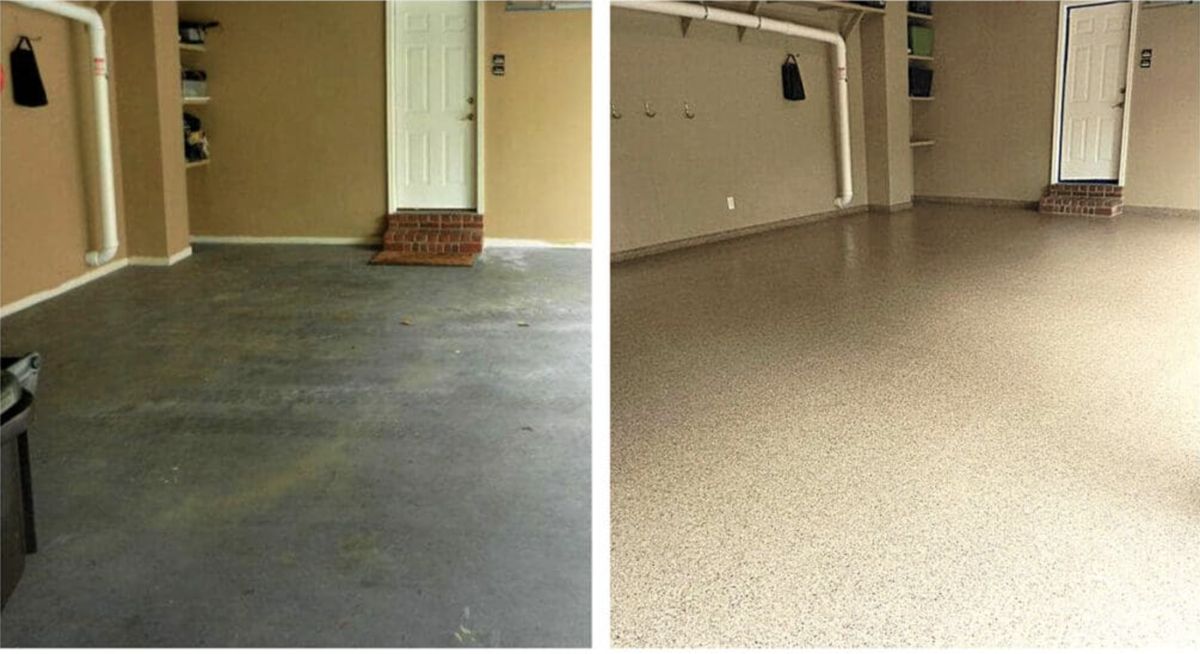
Our crew applying epoxy base coat—coverage and coverage speed matter for Tucson’s morning install windows.
Our Process
We schedule most Tucson garage jobs to start early morning before slab temperatures climb. Here’s what happens on your project:
We test for moisture vapor emission and map any caliche-related cracks. This tells us which primer system your specific slab needs.
Mechanical grinding opens the concrete pores and removes any old coatings, sealers, or contamination so the epoxy bonds at the chemical level.
A penetrating primer seals against monsoon-season vapor transmission and forms the critical bond layer between concrete and epoxy.
We apply the color base coat and broadcast decorative flake, metallic pigment, or quartz aggregate while the epoxy is still wet.
The final coat is UV-stable polyaspartic—rated for continuous heat above 140°F—which gives the floor its scratch resistance and glossy finish.
Why Tucson Chooses Us
We don’t use one-size-fits-all products. Every system we spec accounts for Tucson’s UV intensity, caliche slab conditions, and monsoon moisture cycles.
Every job starts with a moisture vapor emission test at no charge. If your slab is too wet to coat, we tell you—we don’t install and hope for the best.
Over 500 residential and commercial floors coated across Tucson, Marana, Oro Valley, and Sahuarita. We know how Pima County concrete behaves across seasons.
Pricing
Every garage is different, so we price each floor after a free on-site walkthrough. Here’s what moves the price:
| Factor | How It Affects Your Price |
|---|---|
| Garage size (single, two-car, three-car) | More square footage means more material and labor |
| System type | Solid-color is the most affordable; full-flake, metallic, and polyaspartic systems cost more |
| Slab condition | Cracks, pitting, and caliche movement add prep and repair time |
| Old coatings or sealers | Removing a failed coating adds grinding time before the new system goes down |
| Moisture levels | A slab with high vapor emission needs a heavier moisture barrier primer |
Call us for a free, project-specific estimate. We measure, test moisture, and check the slab before we give you a number.
Get Your Free EstimateSelf-Qualify
Not sure which camp you’re in? A 10-minute phone call usually answers it. We’ll be straight with you.
Call (520) 675-6593Common Questions
Epoxy flooring cost in Tucson depends on the system you choose, the size of the space, and the condition of the concrete. Metallic and polyaspartic systems sit at the higher end, while solid-color epoxy is the most affordable option. Every project gets a free on-site estimate with moisture testing, so the number you get is based on your actual slab.
A professionally installed polyaspartic or UV-stable epoxy system lasts 10 to 20 years in Tucson garages. Standard big-box epoxy kits typically fail within two to five years because they lack the UV resistance and flexibility needed to handle Arizona’s 100-degree temperature swings. Proper surface prep and a quality topcoat are what separate a lasting floor from a peeling one.
Yes, with the right system. Tucson garages face summer surface temperatures above 130°F and humidity spikes during monsoon season, which can cause standard epoxy to bubble or delaminate. We use polyaspartic topcoats rated for continuous heat exposure and include a moisture vapor barrier as part of every garage floor installation.
Epoxy is a two-part resin that cures slowly and bonds strongly to concrete, but it can yellow under UV light and soften in extreme heat. Polyaspartic is a newer generation coating that cures faster, resists UV fading, and handles Arizona temperature extremes without becoming brittle. Most Tucson installations use epoxy as the base coat and polyaspartic as the protective topcoat.
DIY epoxy kits from hardware stores are thin—usually less than 3 mils—and lack a moisture vapor barrier. In Tucson, where monsoon season drives ground moisture through concrete slabs, that leads to bubbling and peeling within a year or two. Professional installations include diamond grinding, moisture testing, and multi-coat systems that bond properly to desert concrete.
It can. Summer monsoons drive moisture vapor through concrete slabs from the ground up, and if a floor coating lacks a proper primer or moisture barrier, that vapor pressure causes the coating to bubble and lift. We test moisture emission rates before every installation and choose the right primer system based on what we find.